
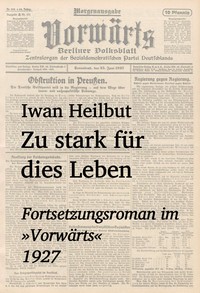
Zu stark für dies Leben : Als Fortsetzungsroman im »Vorwärts« (1927) by Heilbut
Iwan Heilbut's Zu stark für dies Leben is a forgotten piece of Weimar-era fiction that deserves a fresh look. Originally published in 1927 as a serial in the Social Democratic Party's newspaper, it's a raw, unfiltered story of a soldier's return to a world that has no use for him.
The Story
The book follows Max, a veteran of the First World War. He comes back to Berlin, but the city is a different place—full of poverty, political tension, and a deep divide between the rich and the struggling working class. Max is physically strong and hardened by war, but that strength becomes a problem. He can't just slip back into a quiet life. He sees injustice everywhere and his temper, forged in the trenches, constantly gets him into trouble. The plot follows his struggle to find work, love, and a sense of purpose in a society that seems designed to crush people like him. It's a day-by-day battle for survival and dignity.
Why You Should Read It
What grabbed me was how current it feels. This isn't a dusty history lesson. Heilbut writes with a journalist's eye for detail, painting a vivid picture of 1920s Berlin—the smoky bars, the cramped apartments, the political rallies. Max is a frustrating but compelling character. You understand his rage, even when you wish he'd make better choices. The book doesn't offer easy answers. It asks tough questions about what society owes to those it sends to fight, and what happens when they come home broken, physically or mentally. It's a powerful look at alienation, long before that term became common.
Final Verdict
This book is perfect for readers who love character-driven historical fiction and stories about social justice. If you enjoyed the atmosphere of books like Berlin Alexanderplatz or are interested in the turbulent period between the world wars, you'll find a lot here. It's also a great find for anyone who believes old stories can speak directly to modern problems. Be prepared for a story that's more about internal and social conflict than a fast-paced plot. It's a tough, honest, and surprisingly moving window into a lost world.
This book is widely considered to be in the public domain. Preserving history for future generations.
Dorothy Moore
1 year agoHonestly, the author's voice is distinct and makes complex topics easy to digest. I learned so much from this.
Andrew Wright
1 year agoThanks for the recommendation.
Michelle Ramirez
1 year agoHigh quality edition, very readable.





Karen Scott
5 months agoUsed this for my thesis, incredibly useful.